Table Course access Intermediate+

Terminology in Russian-Chinese Translation

A terminology table structure: rendering, context, source, note and risk of error.
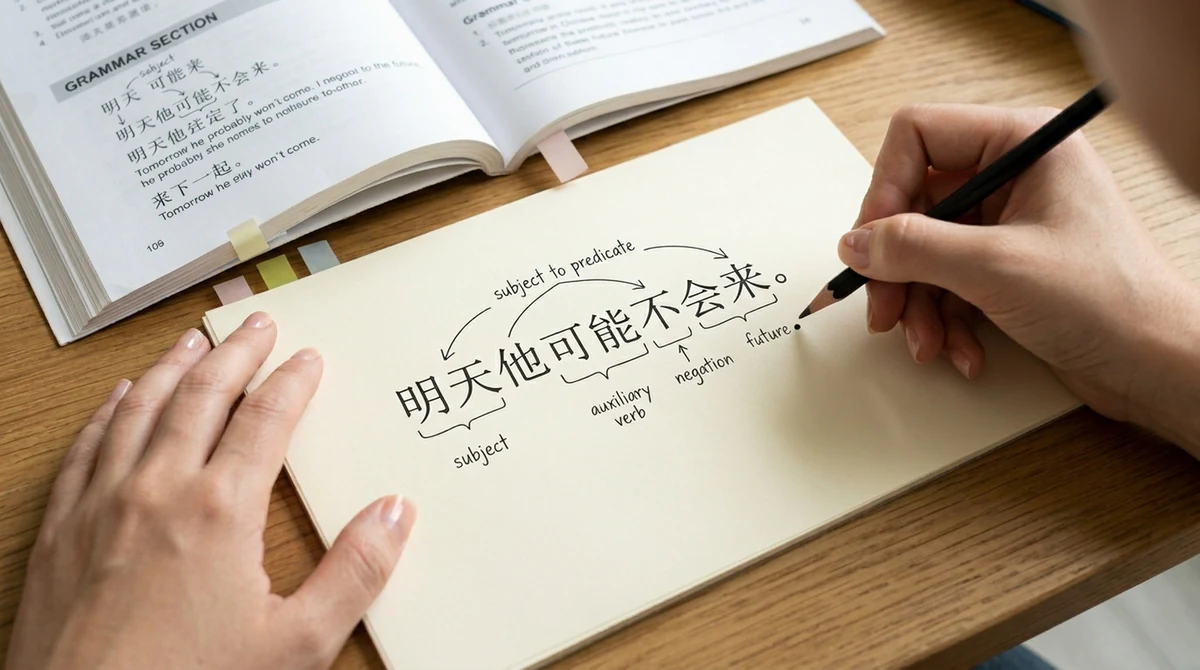
Writing a Chinese sentence by hand
Topic
Translation
Date
2026-05-17
Reading
5-7 min

A terminology table is not for mechanical matching of equivalents but for documenting decisions. In Russian-Chinese translation, the word itself is only one part; domain, context, source and risk of semantic transfer matter as well.

A minimal table includes the term, rendering, usage context, source, comment and decision status. This is especially useful for professional, legal, educational and scholarly texts.

The main rule is that a term must be checked within a conceptual system. The same Russian term may require different Chinese solutions depending on domain, genre and communicative task.

Core idea A terminology table structure: rendering, context, source, note and risk of error.

Route

What to Read Next

HSK 1: Grammar and Vocabulary of the New Standard

A starting course that organizes HSK 1 into clear grammar blocks and vocabulary themes.

HSK 2: Grammar and Vocabulary of the New Standard

The continuation of the HSK line: grammar, vocabulary, exercises and more confident short-text reading.

Chinese Course: HSK 1 Grammar and Vocabulary

A textbook for the new HSK 3.0 standard: updated vocabulary, grammar blocks and exercises.

Chinese Course: HSK 2 Grammar and Vocabulary

The continuation of the HSK textbook line: vocabulary, grammar and reading practice.

Linear Structure of the Noun Phrase in Chinese

Puti Podnebesnoy, vol. XII, part 1. Minsk State Linguistic University, pp. 46-55.

On the Semantics of the Suffix 们 -men in Chinese

New World. New Language. New Thinking, issue VIII. Diplomatic Academy of the Russian MFA, pp. 30-36.

Course link

Want to Discuss This in Class?

Send an Application

Describe the task, preferred format and convenient contact details. A reply will be sent to the email or Telegram you provide.